
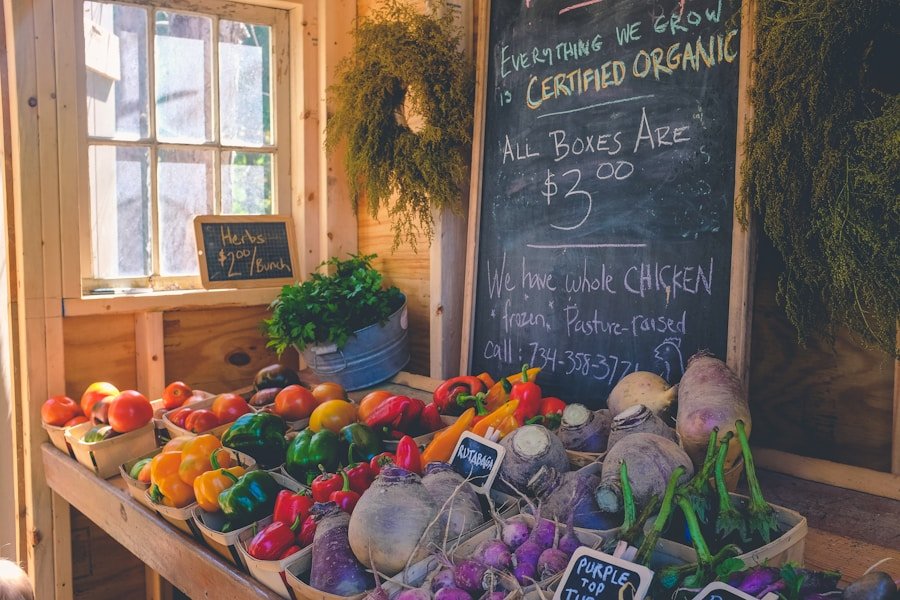
The food industry plays a crucial role in the global economy, providing sustenance to billions of people around the world. However, the current state of the food system has raised concerns about its impact on the environment, public health, and social equity. In response to these challenges, sustainable solutions have emerged as a way to address the negative effects of food production and consumption. Sustainable practices in the food industry aim to minimize environmental impact, promote social responsibility, and ensure economic viability for future generations. This article will explore the current state of the food system, the role of the food industry in regenerating the food system, sustainable practices and innovations in food production, the importance of sustainable sourcing and supply chain management, consumer education and awareness in supporting sustainable food practices, and the future of sustainable solutions in the food industry.
The Current State of the Food System and its Impact on the Environment
The current state of the food system is characterized by unsustainable practices that have significant negative impacts on the environment. The industrialization of agriculture has led to deforestation, soil degradation, water pollution, and loss of biodiversity. In addition, the intensive use of chemical fertilizers and pesticides has contributed to soil erosion and water contamination. The transportation and distribution of food products also contribute to greenhouse gas emissions, further exacerbating climate change. Furthermore, food waste is a major issue in the food system, with approximately one-third of all food produced for human consumption being lost or wasted. These issues highlight the urgent need for sustainable solutions in the food industry to mitigate environmental damage and ensure the long-term viability of the food system.
The Role of the Food Industry in Regenerating the Food System
The food industry has a critical role to play in regenerating the food system by adopting sustainable practices that promote environmental stewardship, social responsibility, and economic viability. This includes implementing regenerative agriculture practices that restore soil health, enhance biodiversity, and sequester carbon. By prioritizing sustainable sourcing and supply chain management, the food industry can reduce its environmental footprint and support local economies. Additionally, investing in research and development of sustainable technologies and innovations can lead to more efficient and environmentally friendly food production methods. Furthermore, the food industry can collaborate with policymakers, non-governmental organizations, and other stakeholders to advocate for policies that support sustainable agriculture and food systems. By taking a proactive approach to sustainability, the food industry can contribute to regenerating the food system and ensuring a more resilient and equitable future for all.
Sustainable Practices and Innovations in Food Production
Sustainable practices and innovations in food production are essential for reducing the environmental impact of the food industry. One such practice is organic farming, which eliminates the use of synthetic fertilizers and pesticides, promotes soil health, and reduces water pollution. Another sustainable practice is agroforestry, which integrates trees and shrubs into agricultural landscapes to enhance biodiversity, improve soil fertility, and sequester carbon. In addition, precision agriculture uses technology such as GPS, sensors, and drones to optimize resource use and minimize environmental impact. Innovations in food production also include alternative protein sources such as plant-based meats and cultured meats, which have a lower environmental footprint compared to traditional animal agriculture. Furthermore, sustainable packaging solutions such as biodegradable materials and reusable containers can reduce waste and pollution in the food industry. These sustainable practices and innovations are crucial for transitioning towards a more environmentally friendly and resilient food system.
The Importance of Sustainable Sourcing and Supply Chain Management
Sustainable sourcing and supply chain management are essential for reducing the environmental impact of the food industry and promoting social responsibility. By sourcing ingredients from local farmers and producers, the food industry can support local economies, reduce transportation emissions, and ensure product traceability. Additionally, implementing fair trade practices can improve working conditions for farmers and workers in developing countries while promoting ethical sourcing of products such as coffee, cocoa, and tea. Furthermore, supply chain transparency is crucial for identifying and addressing environmental and social risks in the production of food products. By working with suppliers to improve sustainability standards and practices, the food industry can ensure that its products are produced in an environmentally responsible and socially ethical manner. Sustainable sourcing and supply chain management are integral components of a more sustainable and equitable food system.
Consumer Education and Awareness in Supporting Sustainable Food Practices
Consumer education and awareness play a vital role in supporting sustainable food practices by influencing purchasing decisions and driving demand for environmentally friendly products. By educating consumers about the environmental impact of their food choices, the food industry can empower individuals to make more sustainable decisions. This includes promoting plant-based diets, reducing food waste, choosing organic and locally sourced products, and supporting companies with strong sustainability commitments. Additionally, labeling initiatives such as organic certification, fair trade certification, and carbon footprint labeling can help consumers make informed choices about the products they purchase. Furthermore, consumer awareness campaigns can raise public consciousness about issues such as food waste, deforestation, and climate change, encouraging individuals to take action towards a more sustainable food system. By engaging consumers as partners in sustainability, the food industry can drive positive change towards a more environmentally friendly and socially responsible future.
The Future of Sustainable Solutions in the Food Industry
The future of sustainable solutions in the food industry holds great promise for addressing environmental challenges while ensuring a resilient and equitable food system. As consumer demand for sustainable products continues to grow, the food industry will be incentivized to adopt more environmentally friendly practices and innovations. This includes investing in research and development of sustainable technologies such as vertical farming, aquaponics, and alternative protein sources. Additionally, advancements in precision agriculture, renewable energy use, and waste reduction technologies will further reduce the environmental impact of food production. Furthermore, collaborations between the public sector, private sector, non-governmental organizations, and academia will drive policy changes that support sustainable agriculture and food systems. By working together towards a common goal of sustainability, the future of the food industry holds great potential for regenerating the food system and ensuring a more resilient and equitable future for all.
In conclusion, sustainable solutions in the food industry are essential for addressing environmental challenges while ensuring a resilient and equitable food system. The current state of the food system has raised concerns about its impact on the environment, public health, and social equity. However, by adopting sustainable practices and innovations in food production, prioritizing sustainable sourcing and supply chain management, engaging consumers through education and awareness campaigns, and collaborating with stakeholders towards a common goal of sustainability, the food industry can play a critical role in regenerating the food system. The future of sustainable solutions in the food industry holds great promise for driving positive change towards a more environmentally friendly and socially responsible future.