
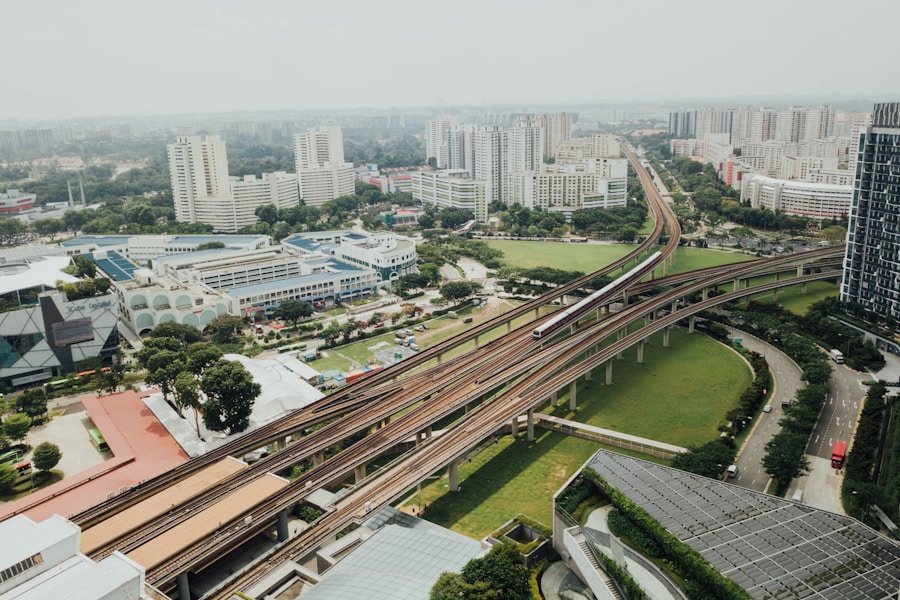
Dubai’s approach to urban development and economic expansion has established a distinct model of sustainable growth. This model integrates ambitious economic objectives with a growing emphasis on environmental considerations, aiming to balance rapid industrialization with ecological preservation. The emirate’s strategy involves significant investment in renewable energy, water management, waste reduction, and green building initiatives, alongside diversification efforts to move beyond traditional oil-based revenue streams. Examining Dubai’s trajectory reveals a conscious effort to build a future that is both economically prosperous and environmentally resilient. This exploration focuses on the mechanisms, challenges, and outcomes of Dubai’s commitment to eco-friendly expansion.
Pillars of Dubai’s Sustainable Growth Strategy
Dubai’s pursuit of sustainable growth is built upon several foundational pillars, each addressing a critical aspect of urban development and resource management. These pillars are not isolated initiatives but are interconnected, forming a comprehensive strategy designed to foster long-term viability. The emirate has recognized that true sustainability requires a holistic approach, encompassing energy, water, waste, transportation, and urban planning.
Renewable Energy Integration
A cornerstone of Dubai’s sustainable expansion is its deliberate move towards integrating renewable energy sources into its power grid. This shift is a significant departure from historical reliance on fossil fuels and represents a substantial investment in future energy security and environmental responsibility. The long-term vision is to create a diversified energy portfolio that minimizes carbon emissions.
Mohammed bin Rashid Al Maktoum Solar Park
The Mohammed bin Rashid Al Maktoum Solar Park stands as a flagship project, symbolizing Dubai’s commitment to solar power. This ambitious undertaking is one of the largest single-site solar parks in the world, with a planned capacity that will significantly contribute to the emirate’s renewable energy targets. Its phased development allows for the incorporation of the latest solar technologies, enhancing efficiency and output. The park’s expansion is a testament to Dubai’s willingness to scale up renewable energy deployment, recognizing its potential to meet growing energy demands without exacerbating environmental concerns. The sheer scale of this project acts as a powerful signal to the global market, encouraging further investment and innovation in solar technology.
Concentrated Solar Power (CSP) Technology
Beyond conventional photovoltaic (PV) panels, Dubai’s solar strategy also includes the deployment of Concentrated Solar Power (CSP) technology. CSP units use mirrors to concentrate sunlight onto a receiver, generating heat that can then be used to produce electricity. This technology offers the advantage of thermal energy storage, allowing for electricity generation even after the sun has set. This capability is crucial for ensuring a stable and reliable power supply, a vital consideration for an economy that operates around the clock. The integration of CSP represents a sophisticated approach to solar energy, moving beyond simple energy generation to address the intermittency challenges often associated with renewables.
Net Metering and Feed-in Tariffs
To incentivize widespread adoption of solar energy by residential and commercial consumers, Dubai has introduced policies such as net metering and feed-in tariffs. Net metering allows consumers who generate their own electricity from solar panels to feed excess power back into the grid and receive credits on their electricity bills. Feed-in tariffs provide a guaranteed price for renewable energy fed into the grid, offering financial certainty to investors and homeowners. These mechanisms act as catalysts, encouraging individuals and businesses to invest in solar installations, thereby expanding the distributed generation capacity of the emirate and fostering a culture of energy independence and environmental stewardship.
Water Conservation and Management
Water scarcity is a defining challenge in arid regions like Dubai. Consequently, water conservation and efficient management are critical components of its sustainable growth strategy. The emirate has invested heavily in desalination technologies, water recycling, and public awareness campaigns to ensure responsible water use.
Advanced Desalination Plants
Dubai operates some of the world’s largest and most technologically advanced desalination plants. These facilities are essential for meeting the high per capita water consumption driven by a growing population and a thriving tourism sector. The focus is on employing energy-efficient desalination processes, such as reverse osmosis (RO), which consume less energy than older thermal methods. Continuous research and development are aimed at further optimizing these processes to reduce their environmental footprint, particularly concerning energy consumption and brine disposal. These plants are, in essence, the lifeblood of the city in a desert, and their sustainable operation is paramount.
Wastewater Treatment and Recycling
Significant investment has been directed towards advanced wastewater treatment and recycling infrastructure. Treated wastewater is repurposed for irrigation of green spaces, parks, and agricultural projects, reducing the demand for potable water for these non-drinking purposes. This circular economy approach to water ensures that a valuable resource is not wasted but is instead reintegrated into the system. The efficiency of these treatment plants minimizes the discharge of untreated or partially treated water into the marine environment, protecting coastal ecosystems.
Smart Water Management Systems
The implementation of smart water management systems, utilizing sensors and data analytics, allows for real-time monitoring of water networks. This helps in detecting leaks promptly, reducing water loss, and optimizing distribution. These systems are akin to a nervous system for the city’s water supply, enabling rapid response to issues and ensuring that every drop is accounted for and utilized effectively. Public awareness campaigns also play a crucial role, educating citizens and businesses about water conservation practices and fostering a sense of collective responsibility.
Waste Management and Circular Economy Initiatives
Dubai is actively developing strategies to manage its growing waste streams more sustainably, moving towards a circular economy model. This involves reducing waste generation at the source, maximizing recycling and recovery rates, and minimizing landfill reliance.
Integrated Waste Management Centers
The establishment of integrated waste management centers signifies a shift from rudimentary waste disposal to more sophisticated processing. These centers are designed to sort, treat, and recover valuable materials from waste streams. This includes sorting recyclables, processing organic waste for composting or energy generation, and handling residual waste through advanced treatment methods. The goal is to extract maximum value from what would otherwise be discarded, treating waste not as a problem but as a resource.
Waste-to-Energy Plants
To address the significant volume of non-recyclable waste, Dubai is investing in waste-to-energy plants. These facilities convert waste into electricity through controlled combustion processes. While controversial in some contexts, modern waste-to-energy plants are designed with stringent emission controls to minimize their environmental impact. This technology offers a way to generate power while simultaneously reducing the volume of waste sent to landfills, contributing to both energy security and waste reduction goals.
Promoting Recycling and Reducing Single-Use Plastics
Initiatives to promote household and industrial recycling are being strengthened, supported by improved infrastructure and public education. Furthermore, Dubai has begun to implement policies aimed at reducing the consumption of single-use plastics, aligning with global efforts to combat plastic pollution. This might include phased bans on certain single-use plastic items and incentives for businesses to adopt reusable alternatives. These efforts are crucial in changing consumption patterns and fostering a more responsible relationship with materials.
Green Buildings and Urban Planning
Dubai’s commitment to sustainability extends to its built environment, with a strong emphasis on green building practices and sustainable urban planning. This approach aims to reduce the environmental impact of construction and operation of buildings, while also enhancing the quality of life for residents.
Dubai Green Building Regulations and Specifications (DGBR)
The implementation of the Dubai Green Building Regulations and Specifications (DGBR) mandates that new buildings and major renovations adhere to specific environmental performance standards. These regulations cover aspects such as energy efficiency, water conservation, materials selection, and indoor environmental quality. Developers are encouraged to achieve certification under schemes like Estidama or LEED, demonstrating their commitment to sustainable construction. The DGBR acts as a regulatory framework, ensuring that sustainability is not an optional add-on but a core requirement for development.
Energy Efficiency in Buildings
A primary focus of green building in Dubai is enhancing energy efficiency. This involves optimizing building design to reduce the need for artificial lighting and cooling, which are major energy consumers in the region’s hot climate. Measures include improved insulation, high-performance glazing, efficient HVAC systems, and the use of natural ventilation where feasible. Smart building technologies that allow for automated control of lighting and temperature further contribute to energy savings. These buildings are designed to breathe with the climate, rather than fight against it constantly.
Water-Saving Fixtures and Landscaping
Water conservation is integrated into building design through the mandatory use of water-saving fixtures, such as low-flow toilets and showerheads. Furthermore, landscaping practices are encouraged to utilize drought-tolerant native species, minimizing the need for irrigation. Greywater recycling systems, which treat water from sinks and showers for reuse in toilet flushing, are also being promoted. These strategies recognize that every building has a water footprint that needs to be managed diligently.
Sustainable Materials and Waste Management in Construction
Green building regulations also promote the use of sustainable building materials, such as recycled content and locally sourced materials, to reduce embodied carbon. Construction sites are also required to implement robust waste management plans, focusing on reducing, reusing, and recycling construction waste. This minimizes the amount of material sent to landfills and encourages a more responsible approach to resource utilization throughout the construction lifecycle.
Future-Proofing Urban Infrastructure
Dubai’s urban planners are looking beyond immediate needs to create resilient and sustainable infrastructure for the future. This involves anticipating the impacts of climate change and designing solutions that can adapt to evolving environmental conditions.
Smart City Initiatives
Dubai is a prominent player in the global smart city movement, leveraging technology to improve urban living and resource management. Smart city initiatives encompass a wide range of applications, from intelligent transportation systems and smart grids to digital governance and environmental monitoring. These technologies are instrumental in collecting data, optimizing services, and fostering more efficient and responsive urban environments. The data generated by smart city technologies can provide invaluable insights for ongoing sustainability efforts.
Green Transportation Networks
Efforts are underway to promote cleaner and more sustainable transportation options. This includes expanding the Dubai Metro and tram networks, encouraging the adoption of electric vehicles through charging infrastructure development and incentives, and promoting cycling and walking through dedicated pathways. Reducing reliance on private gasoline-powered vehicles is a key objective in mitigating air pollution and carbon emissions from the transport sector. A well-connected public transport system acts as the circulatory system of a sustainable city.
Resilience to Climate Change
As a coastal city in a region prone to extreme heat and potential sea-level rise, Dubai is incorporating climate resilience into its long-term urban planning. This includes investing in advanced cooling technologies for public spaces, developing robust flood mitigation strategies, and ensuring that critical infrastructure is designed to withstand extreme weather events. The city’s approach is to anticipate future environmental challenges and build systems that can bend without breaking.
Challenges and Opportunities in Sustainable Expansion
While Dubai has made significant strides in its pursuit of sustainable growth, the journey is not without its challenges. Navigating these obstacles presents opportunities for further innovation and leadership.
Resource Demands of a Growing Population
The rapid population growth in Dubai places considerable strain on its resources, including water, energy, and land. Meeting the increasing demands of a growing populace requires continuous innovation in resource management and a sustained commitment to efficiency. The challenge lies in growing the economy and improving quality of life without proportionally increasing the environmental footprint per capita.
Balancing Economic Growth with Environmental Limits
Dubai’s economic model is driven by ambitious growth targets. The key challenge is to decouple this economic expansion from environmental degradation, ensuring that progress does not come at the expense of ecological health. This requires a fundamental shift towards a more resource-efficient and circular economy. The goal is to foster an economy that thrives not by consuming more, but by consuming smarter.
Global Context and International Collaboration
Dubai’s sustainability efforts are often viewed within the broader context of global environmental challenges and the UAE’s national commitments. International collaboration and the adoption of global best practices are crucial.
Innovation and Technology Adoption
The emirate’s willingness to invest in and adopt cutting-edge technologies will be a critical factor in overcoming sustainability challenges. This includes advancements in renewable energy, water treatment, waste management, and smart city solutions. Dubai can serve as a testbed for new technologies, accelerating their development and deployment. The relentless pursuit of innovation is the engine that drives this sustainable transformation.
Policy and Regulatory Frameworks
Maintaining and evolving robust policy and regulatory frameworks is essential to guide and incentivize sustainable practices. Continuous review and adaptation of these frameworks are necessary to keep pace with technological advancements and emerging environmental concerns. These frameworks act as the guardrails, ensuring that development stays on a sustainable path.
Future Outlook and Dubai’s Role as a Global Leader
Dubai’s trajectory suggests a commitment to a future that balances prosperity with environmental responsibility. The emirate’s proactive engagement with sustainability issues positions it as a potential leader and model for other rapidly developing urban centers.
Knowledge Sharing and Best Practices
Dubai has the opportunity to share its experiences, both successes and challenges, with other cities and nations. By documenting its journey and showcasing innovative solutions, it can contribute valuable knowledge to the global discourse on sustainable urban development. This makes Dubai more than just a model; it makes it a facilitator of sustainable growth worldwide.
Investing in a Resilient Future
The ongoing investments in renewable energy, water security, and green infrastructure are laying the groundwork for a more resilient future for Dubai. By proactively addressing environmental challenges, the emirate is aiming to secure its long-term viability and maintain its status as a thriving global hub. The success of these initiatives will be measured not just in economic terms, but in the enduring health of its environment and the well-being of its people.